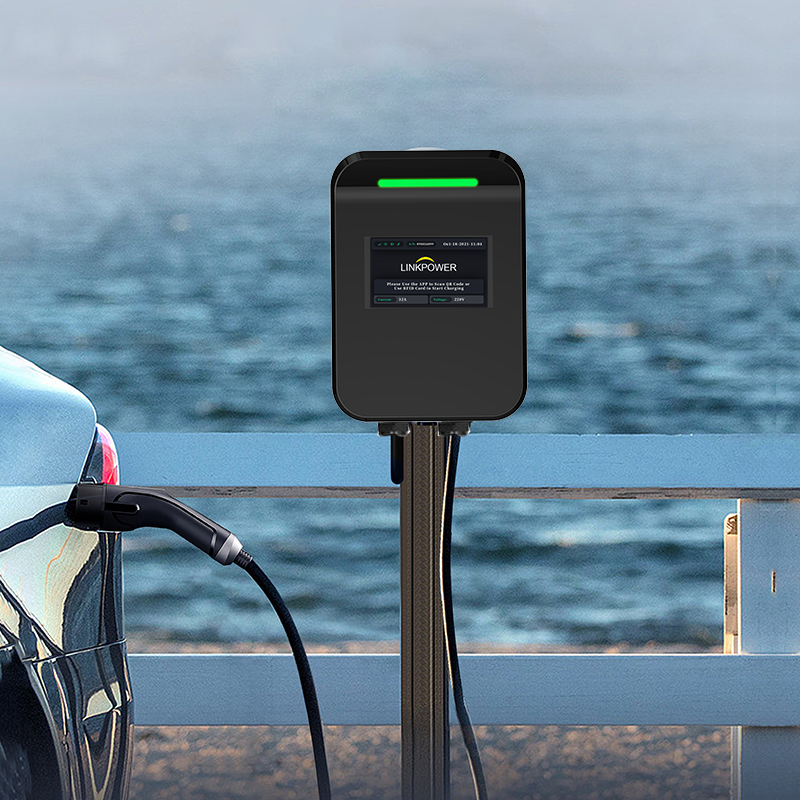
Level 2 EV Charging
Level 2 charging is not a faster version of Level 1. It is a different product: a fixed installation on a dedicated circuit, capable of replenishing a full battery overnight, and the tier where nearly all private charging actually happens. Understanding it means understanding where your time goes, not how many kilowatts the label claims.
The practical basis: Level 2 runs on 208–240 V AC and typically delivers 3.3 to 19.2 kW depending on the circuit and the vehicle. At around 7 kW, a 60 kWh battery takes roughly eight to nine hours from empty; at 11 kW, five to six hours; at 19.2 kW, three to four. Those figures assume the vehicle accepts the full rate, which is the first thing buyers get wrong.
| Charging tier | Supply | Typical output | Miles added per hour | Where it belongs |
|---|---|---|---|---|
| Level 1 | 120 V household outlet | 1.2–1.9 kW | 3–5 | Top-ups where nothing else exists |
| Level 2, entry | 208–240 V, 20–40 A circuit | 3.3–7.7 kW | 10–30 | Home overnight, short commutes |
| Level 2, standard | 240 V, 40–60 A circuit | 7.7–11.5 kW | 25–40 | Home, workplace, fleet overnight |
| Level 2, high power | 240 V, 100 A circuit | 19.2 kW | 50–65 | Large batteries, short overnight windows |
Read the fifth column first. It is the only one that tells you whether a tier is sufficient for a given commute; the output and miles figures are consequences of the vehicle as much as of the charger.
The three numbers that decide your charge rate
- The charger's delivered current. Not its label. A unit rated 48 A on a 40 A circuit delivers 32 A after continuous-load derating.
- The vehicle's onboard charger limit. Many vehicles accept 7.4 or 11 kW and nothing more. On those, a 19.2 kW unit is an 11 kW unit with a larger price tag.
- The battery's state and temperature. A cold pack, or one above roughly 80% state of charge, tapers the accepted rate. This is why the last 20% takes as long as the middle 40%.
Why Level 2 became the default
The economics are not about speed. A Level 2 unit costs more than a Level 1 cord, and it saves the driver a routine: no daily detour to a public charger, no dependency on a corridor that may be occupied, no scheduling around someone else's bay. For a household that drives 30–50 miles a day, the overnight session at 7 kW covers the week's driving in two or three nights, and the marginal cost of that energy is usually the lowest the driver will ever pay.
The same logic applies commercially. A workplace with ten Level 2 bays on a load-managed service serves ten employees' full daily commute, on a supply that would have been inadequate for ten rapid chargers. Level 2 scales by adding bays and by scheduling, not by adding kilowatts.
Corrections worth making
"Level 2" is a circuit specification, not a quality mark. It says nothing about the unit's protection, its connector, its metering or its compliance. Two products both correctly described as Level 2 can differ by every safety-relevant detail.
Faster installation charging is not always better for the battery or the bill. Charging at maximum rate every night produces higher peak demand at the site and slightly more heat in the pack. Most drivers are better served by a scheduled, lower-rate session that finishes before departure — the car is warm and ready, and the site's peak is lower.
Installing a Level 2 charger does not remove the need for public charging. It removes the routine need. Long trips still depend on DC corridors, and a household that plans around a single home charger without checking corridor coverage on its usual routes is planning for the easy case only.
For the hardware specification side — circuits, protection, permits — see Level 2 electric car charger requirements. For the highest-power residential case, see 19.2 kW EV charger. For the UK regulatory context, see home EV chargers UK.
Buyer checklist for Level 2
- Daily mileage measured, then converted to kWh at the vehicle's real consumption — not the brochure figure.
- Vehicle's onboard charger limit confirmed; the charger rating chosen no higher than that limit unless a second vehicle is expected.
- Circuit capacity confirmed, including the continuous-load derating, so the delivered current is known before purchase.
- Connector configuration matched to the vehicles, with adapters treated as exceptions.
- Off-peak window identified with the local tariff, and the schedule set to finish before departure.
- Load management included if more than one charger shares a service.
- Permit, inspection and test results included in the scope, not billed later.
- Monitoring access handed to the owner, so energy per session can be checked against the bill.
Related Products